Air conditioners have become an essential part of modern homes and workplaces, especially in regions where temperatures rise significantly during summer. However, many people overlook the importance of regular AC maintenance until the system stops working or begins performing poorly. Proper maintenance not only ensures better cooling but also extends the life of the unit, improves energy efficiency, and reduces repair costs.
This detailed guide explains everything you need to know about AC maintenance, including its importance, key maintenance steps, common problems, and expert tips to keep your air conditioner running smoothly.
What Is AC Maintenance?
AC maintenance refers to the regular inspection, cleaning, and servicing of an air conditioning system to ensure it operates efficiently and safely. It involves checking different components of the system such as filters, coils, refrigerant levels, electrical connections, and drainage systems.
Routine maintenance helps detect small issues before they turn into expensive repairs and keeps the system working at optimal performance.
Why AC Maintenance Is Important
Many homeowners assume that their air conditioner will work perfectly for years without any servicing. In reality, air conditioners collect dust, dirt, and debris over time, which can affect their performance.
Here are some key reasons why AC maintenance is essential.
Improves Energy Efficiency
A well-maintained air conditioner uses less energy to cool a room. Dirty filters, blocked coils, or low refrigerant levels force the system to work harder, increasing electricity consumption.
Regular servicing keeps the system clean and efficient, helping reduce energy bills.
Extends the Lifespan of the Unit
Air conditioners are a significant investment. Proper maintenance can extend the life of the unit by several years because it prevents excessive wear and tear on the internal components.
Prevents Unexpected Breakdowns
Regular inspections allow technicians to identify and fix potential issues early. This prevents sudden breakdowns during the hottest days when the AC is needed the most.
Improves Indoor Air Quality
Dirty AC filters can circulate dust, allergens, and bacteria throughout your home. Cleaning or replacing filters regularly ensures cleaner and healthier air inside your living space.
Reduces Repair Costs
Minor problems such as loose wiring or clogged drains can be fixed quickly during routine maintenance. Ignoring them may lead to expensive repairs or even system replacement.
See also: Rapidhomedirect .Com: Rapidhomedirect.Com: a Platform for Home Services
Key Components Checked During AC Maintenance
Professional AC maintenance involves checking several important components of the system to ensure everything is functioning properly.
Air Filters
Air filters trap dust, pollen, and other airborne particles. Over time they become clogged and restrict airflow. This makes the AC work harder and reduces cooling performance.
Filters should typically be cleaned or replaced every one to three months depending on usage and environmental conditions.
Evaporator Coils
Evaporator coils absorb heat from indoor air. When dirt accumulates on these coils, their ability to absorb heat decreases, which reduces cooling efficiency.
Cleaning the coils helps maintain proper heat exchange and cooling performance.
Condenser Coils
Condenser coils release the heat collected from inside the building. If these coils are covered in dust or debris, heat cannot escape effectively, causing the system to overheat and consume more energy.
Outdoor condenser units should be cleaned regularly and kept free from leaves, dirt, and obstructions.
Refrigerant Levels
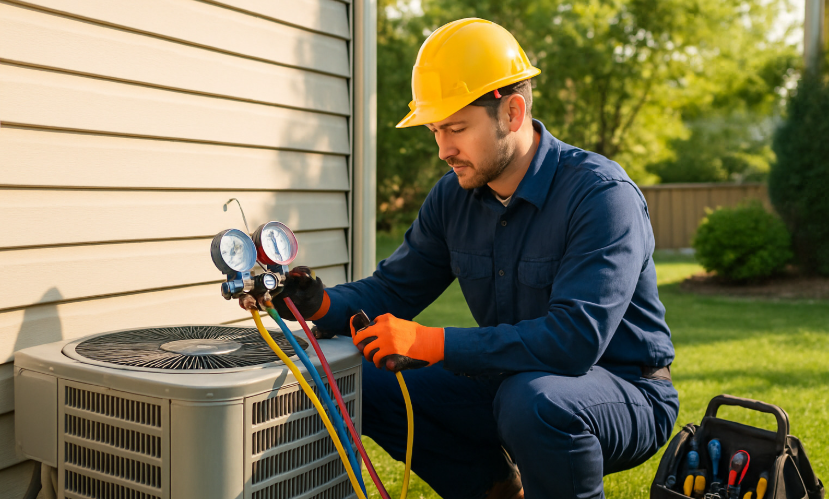
Refrigerant is the substance responsible for absorbing and releasing heat during the cooling process. Low refrigerant levels can indicate a leak and will significantly reduce the system’s cooling ability.
A technician will check refrigerant pressure and refill it if necessary.
Drain Line and Drain Pan
Air conditioners remove moisture from the air during operation. This moisture is collected in a drain pan and expelled through a drain line. If the line becomes clogged, water may leak into the home and cause damage.
Cleaning the drain line prevents blockages and water leakage.
Electrical Components
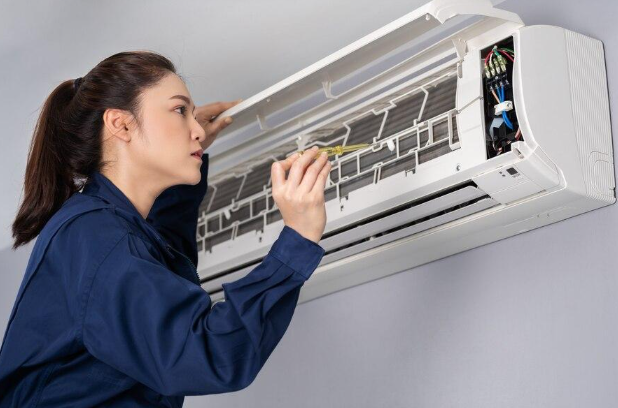
Loose or damaged electrical connections can cause system failures or safety hazards. Maintenance checks include inspecting wiring, capacitors, contactors, and other electrical parts to ensure they are working safely.
Thermostat Calibration
The thermostat controls the temperature settings of the air conditioner. If it is not calibrated correctly, the system may run longer than necessary or fail to cool properly.
Maintenance ensures that the thermostat reads temperatures accurately.
Basic AC Maintenance Tasks You Can Do Yourself
While professional servicing is recommended at least once a year, there are several simple maintenance tasks homeowners can perform to keep their air conditioner in good condition.
Clean or Replace the Air Filter
Checking the air filter regularly is one of the easiest and most important maintenance steps. If the filter appears dirty or clogged, clean or replace it immediately.
Keep the Outdoor Unit Clean
Ensure the outdoor condenser unit is free from dust, leaves, grass, and debris. Maintain at least two feet of clear space around the unit for proper airflow.
Check the Thermostat Settings
Set the thermostat to a comfortable temperature and avoid extreme cooling settings that force the system to work harder.
Inspect the Drain Line
Occasionally check the drain line for clogs or water buildup. A blocked drain line can cause water leakage and humidity issues.
Ensure Proper Airflow
Make sure air vents and registers are not blocked by furniture, curtains, or other objects. Proper airflow helps the system cool rooms evenly.
Signs Your AC Needs Maintenance
Sometimes an air conditioner shows warning signs before a serious problem occurs. Recognizing these signs early can help prevent costly repairs.
Common signs include:
Weak airflow from vents
Unusual noises such as grinding or rattling
Warm air coming from the AC
Unpleasant odors when the system runs
Higher electricity bills without increased usage
Frequent cycling on and off
Water leakage around the unit
If you notice any of these symptoms, it is advisable to schedule maintenance or professional inspection.
How Often Should AC Maintenance Be Performed?
Experts recommend servicing your air conditioner at least once a year, preferably before the start of the summer season. In areas with heavy usage or dusty environments, maintenance may be required twice a year.
Regular seasonal maintenance ensures the system is ready to handle high temperatures and heavy workloads.
Professional AC Maintenance Checklist
During a professional service visit, technicians typically perform the following tasks:
Inspect and clean air filters
Clean evaporator and condenser coils
Check refrigerant levels and inspect for leaks
Test thermostat accuracy
Inspect electrical components and tighten connections
Lubricate moving parts
Clear and clean the condensate drain line
Check system controls and safety features
Measure airflow and overall system performance
These steps ensure that the air conditioner operates efficiently and safely.
Tips to Improve AC Performance Between Maintenance Visits
There are several habits that can help maintain your air conditioner’s performance throughout the year.
Use ceiling fans to improve air circulation
Keep doors and windows closed while the AC is running
Install proper insulation to reduce heat gain
Use curtains or blinds to block direct sunlight
Avoid placing heat-producing appliances near the thermostat
Schedule professional maintenance before peak summer months
Following these tips can significantly reduce strain on your cooling system.
Conclusion
AC maintenance plays a vital role in ensuring the efficiency, reliability, and longevity of your air conditioning system. Regular cleaning, inspection, and servicing help prevent costly breakdowns, improve indoor air quality, and lower energy consumption.
By performing simple maintenance tasks and scheduling professional servicing when needed, homeowners can keep their air conditioners running smoothly even during the hottest days. Investing time and effort in proper AC maintenance ultimately leads to better comfort, reduced expenses, and a longer-lasting cooling system.