For founders building physical product companies — whether in cosmetics, food and beverage, household goods, or specialty industrial products — there is a category of technical knowledge that often gets overlooked in the rush to brand, market, and sell: formulation science. The difference between a product that performs reliably and one that separates on the shelf, feels wrong to the touch, or fails quality control often comes down to a handful of carefully chosen ingredients working behind the scenes. Among the most important of these are emulsifiers.
Understanding the role emulsifiers play — and why ingredient selection and sourcing matter — can be a genuine competitive advantage for any startup whose product involves mixing oil and water phases.
The Problem Emulsifiers Solve
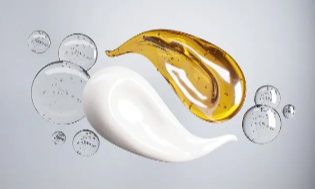
Oil and water do not mix. This simple fact of chemistry is the central challenge in formulating an enormous range of consumer and industrial products. Creams, lotions, sauces, dressings, paints, lubricants, and countless other products are emulsions — mixtures in which one liquid is dispersed as tiny droplets throughout another. Left to their own devices, these mixtures separate: the oil floats to the top, the water sinks to the bottom, and the product fails.
Emulsifiers are the molecules that prevent this. They have a dual structure — one end attracted to water, the other to oil — that allows them to sit at the boundary between the two phases, reducing the interfacial tension and stabilizing the dispersion. A well-chosen emulsifier keeps a product homogeneous, consistent, and stable over its entire shelf life. A poorly chosen one leads to returns, complaints, and reputational damage.
Understanding HLB: The Key to Emulsifier Selection
For founders working with formulators, one concept is worth understanding: the Hydrophilic-Lipophilic Balance, or HLB. This is a numerical scale that describes how water-loving or oil-loving a given emulsifier is. Emulsifiers with low HLB values (roughly 3 to 6) are oil-loving and tend to produce water-in-oil emulsions, where water droplets are dispersed in a continuous oil phase. Those with high HLB values (8 to 18) are water-loving and favor oil-in-water emulsions.
Matching the emulsifier’s HLB to the requirements of a specific formulation is one of the foundational skills of product development. Get it right, and the emulsion is stable and elegant. Get it wrong, and no amount of mixing will hold the product together.
A Workhorse Emulsifier: Span 80
One of the most widely used emulsifiers across multiple industries is sorbitan monooleate, commonly known by its trade name Span 80. It is a nonionic surfactant produced by combining sorbitol with oleic acid — a fatty acid found in many vegetable oils — which gives it a partly natural origin that appeals to many modern formulators.
Span 80 has a low HLB value of around 4.3, making it lipophilic and especially effective at creating stable water-in-oil emulsions. It appears as a light yellow, viscous, oily liquid that is insoluble in water but soluble in oils and organic solvents. This combination of properties makes it remarkably versatile: it is used in cosmetic creams and lotions, in food products as a stabilizer, in pharmaceutical formulations, in agricultural chemicals, in lubricants and metalworking fluids, and in industrial coatings and textiles.
A particularly useful characteristic of Span 80 is how well it works in combination with higher-HLB emulsifiers such as polysorbate 80 (Tween 80). By blending the two in different ratios, formulators can dial in a precise HLB value to suit almost any emulsion system — a flexibility that makes the Span/Tween pairing a staple of formulation laboratories worldwide. For manufacturers and product developers who need a reliable supply, sourcing quality Span 80 sorbitan monooleate from an established chemical supplier ensures the consistency that stable, repeatable production depends on.
Why Sourcing Quality Matters for Startups
For an early-stage product company, ingredient sourcing is not just a procurement task — it is a strategic decision that affects product quality, regulatory compliance, and scalability. Emulsifiers like Span 80 are produced in different grades and purities, and the consistency of the material from batch to batch directly affects the consistency of the finished product.
A startup that sources from an unreliable supplier may find that a formulation which worked perfectly in early testing behaves differently when the supplier changes their process or ships a variable-quality batch. This kind of inconsistency is especially damaging for young brands building a reputation for quality. Working with suppliers who provide certificates of analysis, consistent specifications, and reliable supply is a foundation for stable growth.
There is also the matter of documentation. As a product company scales, it will face increasing regulatory and customer scrutiny — safety data sheets, ingredient disclosures, and compliance certifications all become necessary. Suppliers who maintain thorough documentation make this growth far smoother than those who treat paperwork as an afterthought.
The Bigger Picture: Technical Literacy as Founder Advantage
The founders who build the most resilient product companies tend to be those who take the time to understand the technical foundations of what they sell. You do not need to become a chemist, but understanding concepts like emulsification, HLB, and ingredient sourcing allows you to ask better questions, work more effectively with formulators and suppliers, and make smarter decisions about quality and cost.
In a competitive market, this kind of technical literacy is a genuine differentiator. It is the difference between a founder who is at the mercy of their supply chain and one who understands it well enough to optimize it. Emulsifier chemistry may seem like a small detail, but for product-based businesses, mastering these details is exactly what separates the companies that scale successfully from those that stumble.
Conclusion
Behind every stable cream, every well-mixed sauce, and every reliable industrial fluid is a carefully chosen emulsifier doing quiet, essential work. For founders building product companies, understanding this chemistry — and sourcing quality ingredients like Span 80 from reliable suppliers — is a foundational element of building a business that can deliver consistent quality at scale. In the world of physical products, the technical details are not a distraction from the business. They are the business.