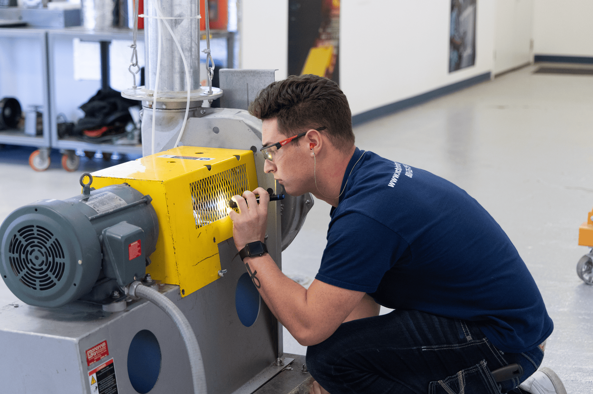
In modern industries, complex machines are employed, which need proper functioning even under harsh conditions. Any minor mechanical problems can cause severe breakdowns if not identified. Vibration analysis has come forward as an effective tool for diagnosing the condition of the machines. Through the analysis of the vibrations, the technicians can get an idea about the conditions inside the machines without disassembling the equipment.
Understanding the Basics of Vibration Analysis
Oscillation analysis is a condition monitoring technique in which the analysis of the oscillations of rotating or moving equipment is carried out. All machines produce vibrations during their operation, but variations in the frequency, amplitude, or form of the vibrations are indicative of developing problems in the equipment. Special devices, called accelerometers, are used to detect the vibrations, and analysis software is employed to interpret the results.
Vibration monitoring can be applied to motors, pumps, compressors, turbines, gearboxes, fans, and other equipment in various industries, including manufacturing, power plants, and transportation systems. By comparing the current readings of the equipment with the original readings, specific fault conditions can be identified, and instead of adopting a reactive approach to maintenance, a predictive approach can be adopted, backed by evidence.
Early Fault Detection and Preventing Unexpected Failures
One of the most useful benefits of vibration tracking is the early detection of faults. It is not often the case that equipment failures are total surprises. The equipment usually shows signs of the impending failure through changes in the rate of vibration. The early warning signs are useful in ensuring that the repairs are carried out during the scheduled downtime.
Inconclusive equipment failures are costly. They interfere with production plans, cause damage to adjacent equipment, and increase the risk of accidents. By regularly monitoring the equipment, the company is able to avoid inconclusive failures. This ensures the smooth flow of operations. Decisions are made based on facts instead of assumptions. This ensures the best use of the resources of the company.
Extending the Lifetime of Equipment
Extending the lifespan of equipment is another major advantage. The exposure to imbalances, excessive loads, and misalignments causes faster wear and weakness of the internal parts of the equipment. When imbalances, excessive loads, and misalignments persist, the equipment deteriorates faster and, therefore, needs to be replaced. Vibration monitoring helps to identify imbalances, excessive loads, and misalignments before they cause damage to the equipment.
Correcting small problems early on minimizes friction, heat, and stress. The equipment, therefore, operates closer to its design parameters. Many organizations choose to invest in the best vibration analysis services that deliver actionable insights and tailored maintenance recommendations. By protecting critical assets through informed interventions, companies maximize return on capital expenditures and reduce long-term replacement costs.
Improving Safety and Operational Reliability
Equipment failure might lead to dangerous conditions, particularly within industries like the oil and gas business, mining, or power plants. A failing rotor might cause a fire, leakage, or structural failure. Vibration sensors help to create a safe working environment by recognizing instability before a calamity strikes.
Well-functioning equipment plays a vital role in enhancing the general performance of a business. Predictable machine behavior assists in the accurate prediction of machine output. As long as the machines’ vibration levels remain within the acceptable range, the output of the machines will be constant. A business will gain confidence in the condition of the equipment, thus benefiting the management through the accurate prediction of the business.
See also: Global Business Hub
Supporting Data-Driven Maintenance Strategies
Typically, maintenance activities followed a set schedule or responded to equipment failures. Vibration tracking helps implement a more sophisticated approach to maintenance by allowing for predictive maintenance based on real-time data. Digital monitoring systems can combine data from equipment vibration with other information, such as temperature, lubrication, and performance, to create a complete profile of equipment condition.
This data-driven approach helps an organization fine-tune its maintenance schedule and prevent unnecessary replacement of equipment components. Rather than performing maintenance too early or too late, maintenance activities occur exactly when needed. As the analysis continues over time, the knowledge base built from past data helps improve future analysis.
In summary, vibration analysis has a vital role in today’s maintenance strategies. By incorporating vibration monitoring into their maintenance process, companies have achieved more reliable, cost-effective, and stable operations. In a world that measures profit by uptime, oscillation analysis is a vital tool for companies that strive for sustainable performance.