Welding has been done with arcs and flames for more than a century, and those methods still build ships, bridges and pipelines. Laser welding is newer, and it promises narrower welds, less distortion and higher speed. But is it actually better? The honest answer is that it depends on the job. Comparing laser welding with traditional methods such as MIG and TIG side by side is the best way to decide, and any laser welding machine manufacturer worth its name will welcome the comparison.
MIG Welding: Fast and Forgiving
MIG welding feeds a wire electrode through a gun while shielding gas protects the weld. It is fast, easy to learn and tolerant of gaps and dirty surfaces, which is why it is the workhorse of fabrication shops. A MIG welder can join thick plate, fill large gaps and work outdoors. Its drawbacks are heat and finish: the arc spreads heat widely, which distorts thin parts, and the weld bead is broad, often needing grinding. Spatter is common, and the operator must clean up afterwards. For heavy structural work and repair jobs where appearance is secondary, MIG remains hard to beat.
TIG Welding: Precise but Slow
TIG welding uses a tungsten electrode and a separate filler rod, giving the operator fine control over the weld pool. It produces neat, high-quality welds on stainless steel, aluminium and thin materials, and it is the preferred method for visible work such as pipework and food-grade fabrication. The trade-off is speed: TIG is slow, it demands skill, and it is tiring over long runs. It also needs clean, well-fitted joints. For low-volume, high-quality work, TIG is excellent. For production volumes, it is expensive in labour.
Laser Welding: Narrow, Fast and Clean
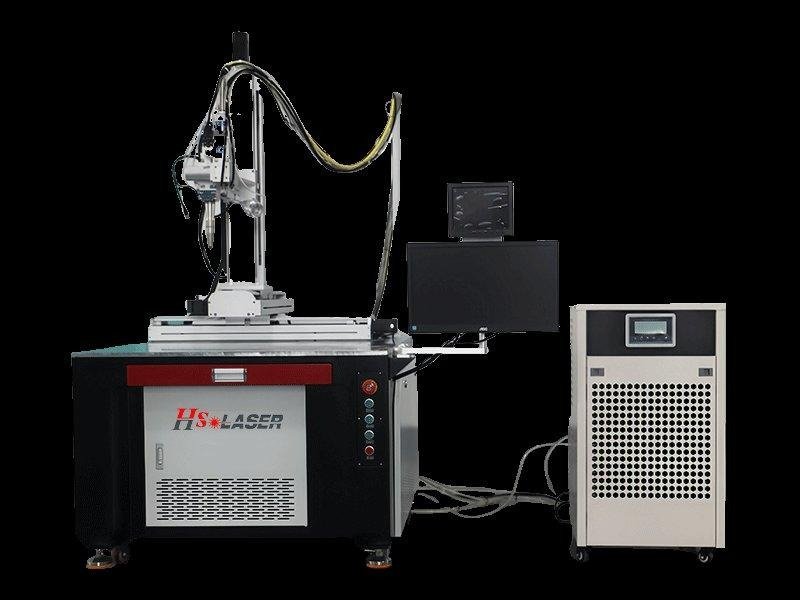
Laser welding focuses a beam of light onto the joint, melting a narrow channel of metal with very little heat spreading into the surrounding material. The weld is narrow, the distortion is minimal and the finish is often good enough to need no grinding. The process is fast, highly repeatable and easy to automate with robots. It works well on thin materials, where arc welding often causes warping, and it produces clean welds without spatter. The drawbacks are cost and preparation. A laser system costs more than a MIG or TIG set, and the joint must fit closely and be clean, since the beam cannot bridge large gaps or burn through heavy contamination the way an arc can.
Comparing the Costs
The purchase price of a laser welding system is higher than that of traditional equipment, and that is often where the comparison stops. The full picture includes labour, finishing, rework and speed. A laser weld that needs no grinding saves finishing time. A part that does not distort saves rework. A faster process means more parts per shift. For high-volume production of precision parts, these savings often repay the higher purchase price. For one-off heavy fabrication, they may not. A laser welding machine manufacturer can help you work through the numbers by testing your own parts and timing the whole process, including finishing.
Choosing the Right Method
The right choice depends on the work. Heavy plate, outdoor repair and rough fabrication still suit MIG. Small batches of high-quality visible welds suit TIG. Precision parts, thin materials, battery work, medical devices and high-volume production suit laser welding. Many workshops keep more than one method and choose per job. There is no shame in that: the best tool is the one that fits the work in front of you.
See also: Estate Embrace Ai Stage Listings
5 Differences That Decide the Choice
- Heat input: laser welding heats a narrow zone; arc welding heats a wide area.
- Distortion: laser welds distort thin parts far less.
- Speed: laser welding is faster on suitable joints and easy to automate.
- Joint preparation: laser welding needs close-fitting, clean joints.
- Cost: laser systems cost more upfront but can save on finishing and rework.
The Learning Curve
Every welding method takes practice, and laser welding is no different. Operators who are used to MIG or TIG will find the laser easier in some ways and different in others. There is no arc to watch and no filler rod to feed, but joint preparation and settings matter more. Training makes the difference. A good laser welding machine manufacturer includes hands-on training with the machine, using your own parts and materials, so your team learns on the work they will actually do. Most operators become confident within days, and the consistency of the process means that once the settings are right, they stay right. If you are switching methods, allow a short learning period and keep your old equipment available for jobs that still suit it. Talk to your laser welding machine manufacturer about refresher training later, since a short session after a few months often answers questions that only appear once the machine is in daily use. The investment in training pays for itself in fewer rejected parts and faster work.
Frequently Asked Questions
Can laser welding replace MIG and TIG completely?
No. Each method has jobs it suits best. Laser welding excels at precision and volume work, while arc methods remain better for heavy, rough or outdoor jobs.
Is laser welding hard to learn?
The basics are straightforward, especially on handheld systems, but good results need training in settings, joint preparation and safety. A good laser welding machine manufacturer includes training.
Does laser welding work outdoors?
It can, but wind and contamination make it harder. Laser welding suits controlled workshop conditions best, while MIG is more forgiving outside.
Final Thoughts
Traditional welding methods are proven, affordable and versatile, and they will not disappear. Laser welding brings precision, speed and cleanliness that arc methods cannot match on suitable work. Compare them on your own parts, count the full cost including finishing and rework, and let the results decide. A laser welding machine manufacturer that invites that comparison is one worth talking to. Ask a laser welding machine manufacturer to weld parts and time the process: a good laser welding machine manufacturer will show you the cost, not just the price. A laser welding machine manufacturer will compare the options, and the laser welding machine manufacturer you choose should help you count the cost, not the price.