Computer numerical control machines have transformed manufacturing by enabling precise and repeatable machining operations. Modern CNC equipment can produce complex components with limited manual intervention during the cutting process. However, many workshops still rely heavily on operators to load raw materials, remove finished parts, inspect components, and prepare machines for the next cycle. These activities create opportunities for automation but also introduce technical and economic challenges. The difficulty becomes particularly apparent in workshops that manufacture many different components in relatively small batches.
Why CNC Machine Tending Is Difficult to Automate
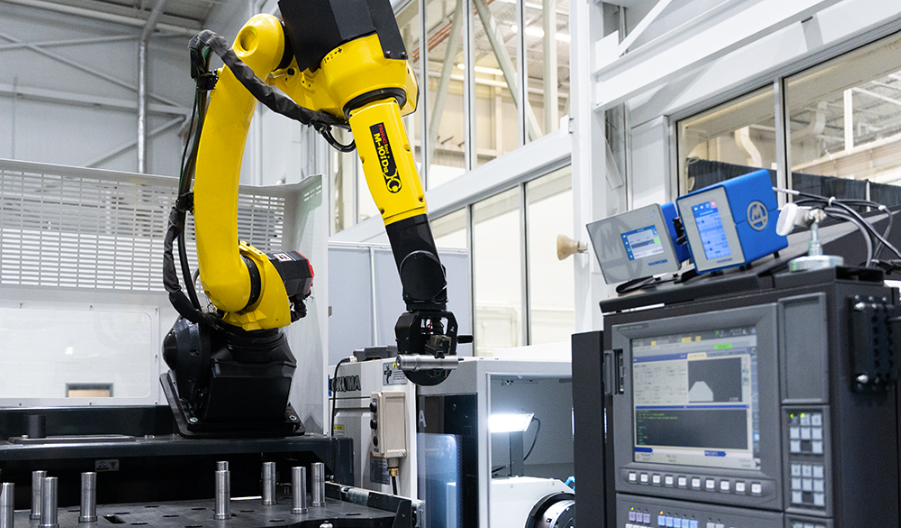
CNC machine tending generally involves transferring workpieces into and out of machining equipment. A robotic system may collect a blank from a tray, position it inside the machine, and remove the completed component after machining. In a stable production environment, these actions can be repeated using predefined movements and fixtures. The situation becomes more complicated when part dimensions, weights, and gripping requirements change frequently. Each variation may require adjustments to the robotic workflow.
The CNC machine itself introduces additional constraints. Robotic operations must be coordinated with machine doors, workholding devices, cycle-completion signals, and safety functions. The robot cannot simply place a component inside the machine without confirming that the fixture is ready. Similarly, the machining cycle must not begin until the workpiece is correctly positioned and secured. Reliable communication between the robot and CNC controller is therefore essential.
The Problem of Short Production Runs
High-mix CNC workshops often manufacture small quantities of specialized components. A production order may contain only a few dozen parts before the machine must be prepared for another job. This limits the time available to recover the engineering effort associated with automation. If programming a robot takes several hours, the investment may be difficult to justify for a short machining run. The economic challenge is therefore different from that of a dedicated high-volume production line.
Consider a workshop producing five component variants during one shift. Each variant may require a different workholding arrangement and robotic handling sequence. Even if the robot performs every loading operation successfully, repeated setup activities can reduce the available production time. A flexible automation system would need to minimize these interruptions. This makes programming efficiency and changeover time central factors in the evaluation of CNC automation.
See also: Beyond Spreadsheets: The Rise of Modern Financial Reconciliation Tech
The Relationship Between Machining Time and Automation Value
The potential benefits of robotic machine tending depend partly on the duration of the machining cycle. When a CNC operation takes several minutes, an operator may be able to supervise multiple machines between loading activities. Robotic loading can reduce the need for repeated manual interventions and potentially support longer periods of unattended operation. However, the benefits depend on material availability, process stability, and the reliability of the entire cell. Automated loading alone does not guarantee continuous production.
Short machining cycles present a different challenge. If a machine completes each component quickly, robotic handling time becomes a larger proportion of the overall cycle. The robot must perform loading and unloading operations efficiently enough to avoid reducing machine utilization. Gripper design, robot positioning, and machine access can all influence performance. In some cases, dedicated mechanical automation may offer a simpler solution than a general-purpose industrial robot.
Calculating the Impact of Loading Time
A basic example illustrates how handling operations affect CNC productivity. Assume that machining takes eight minutes per component and manual loading requires one minute. The complete cycle lasts nine minutes, excluding other interruptions. If robotic handling reduces loading time to 40 seconds, the theoretical cycle becomes eight minutes and 40 seconds. The resulting time saving is modest for each individual component but can accumulate across longer production periods.
The calculation changes when automation allows an operator to manage additional equipment. The economic benefit may then arise from improved labor allocation rather than a major reduction in machining cycle time. However, these gains should not be assumed without examining the operator’s existing responsibilities. Quality inspection, tool changes, and material preparation may still require human involvement. A realistic assessment must account for all activities associated with production.
Can AI Reduce the Programming Burden?
Conventional CNC machine-tending robots often rely on manually defined positions and movement sequences. Engineers program how the robot approaches a component, grips it, and places it inside the machine. New component geometries may require different positions or handling strategies. Artificial intelligence and advanced planning software are being investigated as ways to reduce some of this repetitive engineering work. Their potential value is particularly relevant when product changes occur frequently.
The subject is explored in discussions of Trener AI CNC automation, which address the challenges of applying robotic machine tending in high-mix workshops. One important area of development involves separating general handling tasks from the details of individual components. Software may support the reuse of task sequences while adapting selected parameters to different workpieces. Vision systems and planning algorithms can contribute to this process when appropriate. Nevertheless, the feasibility of reducing programming effort depends on the variability of the components and the capabilities of the automation system.
Mechanical Constraints That Software Cannot Eliminate
CNC automation requires reliable physical interaction with workpieces and fixtures. A robot must grip each component securely without damaging its surface or interfering with critical dimensions. Machined parts may have sharp edges, residual coolant, or metal chips that affect handling. Differences in component weight and center of gravity can also influence gripper selection. These considerations remain important regardless of how sophisticated the control software becomes.
Workholding presents another major challenge. The robot must place the component in a position that allows the fixture to secure it correctly. Small positioning errors can affect machining accuracy or create collision risks. Sensors may be needed to verify that the workpiece is seated properly before the machine starts. Automated systems must also handle situations in which a component cannot be positioned as expected.
Managing Chips, Coolant, and Finished Parts
The CNC environment can be difficult for robotic equipment. Cutting fluids may accumulate on components and reduce gripping friction. Metal chips can interfere with fixtures or contaminate positioning surfaces. Finished parts may also be hot, wet, or covered in machining residue. These conditions influence the selection of grippers, sensors, and protective equipment.
Automation designers must consider how components move through the entire cell. A robot may need to transfer finished parts to inspection equipment, washing stations, or storage trays. The arrangement of these devices affects reachability and cycle time. Poorly designed material flow can create unnecessary movements and increase the risk of interruptions. Effective CNC automation therefore requires attention to the surrounding production process, not only the loading operation.
Evaluating the Economics of CNC Automation
The financial assessment of robotic machine tending should include more than the purchase price of the robot. Additional expenses may involve grippers, machine interfaces, fixtures, guarding, integration, and programming. Maintenance, training, and software support also contribute to operating costs. These investments must be compared with realistic improvements in equipment utilization and labor productivity. The expected number of production hours is particularly important.
A workshop operating one shift may achieve different results from a facility running equipment around the clock. Longer operating periods can create more opportunities to recover automation costs. However, unattended production introduces additional requirements for process monitoring and fault recovery. Tool wear, broken cutting tools, and machining errors can interrupt operations even when robotic loading works correctly. These factors should be included in any estimate of achievable production capacity.
Designing CNC Automation Around Actual Production Needs
A practical CNC automation project begins with an analysis of the components being manufactured. Engineers can group parts according to dimensions, weight, gripping requirements, and workholding methods. This helps identify which products can share the same robotic equipment and which require specialized solutions. It also reveals whether standardizing fixtures or component presentation could simplify automation. Such improvements may reduce project complexity before advanced software is introduced.
Pilot testing should use representative components rather than only the easiest workpieces. The system should be evaluated during product changeovers, routine operation, and foreseeable error conditions. Relevant indicators include setup duration, loading success rate, machine utilization, and operator intervention frequency. Results should be compared with the workshop’s existing production process. This approach makes it possible to distinguish genuine operational improvements from performance demonstrated under unusually favorable conditions.