Introduction
In today’s competitive manufacturing and packaging industry, efficiency, precision, and automation are essential for success. One of the most critical components in modern production facilities is the square bottle labeling machine, which ensures accurate labeling, consistent branding, and high-speed output across various industries such as beverages, pharmaceuticals, cosmetics, and food processing.
A modern high-speed bottle labeling system is designed to eliminate manual errors, increase production capacity, and maintain uniform label placement on every container. As global demand for packaged goods continues to grow, manufacturers are increasingly investing in advanced labeling technologies to optimize their packaging lines and reduce operational costs.
The evolution of the bottle labeling machine has transformed traditional production workflows into fully automated systems capable of handling thousands of bottles per hour with exceptional accuracy. This article explores its working principles, benefits, types, applications, and how businesses can choose the right solution for their production needs.
What is a Bottle Labeling Machine?
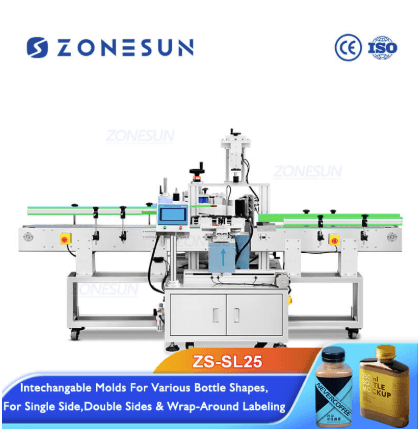
A bottle labeling machine is an automated packaging device used to apply labels onto bottles, jars, and containers with precision and speed. These machines are widely used in industries where branding, compliance, and product identification are essential.
The primary purpose of a labeling machine is to ensure that every product carries consistent and correctly positioned labels, including product names, ingredients, barcodes, batch numbers, and branding elements.
Modern systems are designed with advanced sensors, servo motors, and PLC control systems to ensure high accuracy and minimal downtime. Whether it is round bottles, flat containers, or irregular shapes, labeling machines can be customized to handle different product types efficiently.
How a High-Speed Bottle Labeling Machine Works
A high-speed labeling system operates through a synchronized automation process designed for continuous production lines. The working process typically includes the following stages:
1. Bottle Feeding System
Bottles are automatically fed into the conveyor system, which aligns them properly for labeling. This ensures smooth and uninterrupted flow.
2. Label Detection and Positioning
Sensors detect the exact position of each bottle and label roll. This step ensures that labels are applied accurately without misalignment.
3. Label Dispensing Unit
The machine dispenses labels from a roll using a controlled motor system. The labeling head applies the label precisely onto the bottle surface.
4. Pressing and Finishing
After application, rollers or brushes press the label firmly onto the bottle to ensure strong adhesion and eliminate air bubbles.
5. Quality Inspection (Optional)
Advanced systems include vision inspection units to verify label placement accuracy and detect defective products.
This seamless automation allows manufacturers to maintain consistent quality while significantly increasing production speed.
Key Features and Benefits of Bottle Labeling Machines
A modern bottle labeling machine offers numerous advantages that directly improve production efficiency and product presentation.
High-Speed Operation
Designed for large-scale production, these machines can label hundreds or even thousands of bottles per minute without compromising accuracy.
Precision and Accuracy
Advanced servo systems ensure labels are applied with exact positioning, reducing waste and improving product appearance.
Reduced Labor Costs
Automation minimizes the need for manual labor, lowering operational expenses while increasing output.
Versatility
These machines can handle different bottle shapes, sizes, and label types, making them suitable for multiple industries.
Improved Brand Presentation
Consistent and professional labeling enhances product visibility and brand identity in competitive markets.
Durability and Reliability
Built with industrial-grade components, labeling machines are designed for long-term performance with minimal maintenance.
Applications of Bottle Labeling Machines
The versatility of labeling systems makes them essential in various industries. Some key applications include:
Beverage Industry
Used for labeling water bottles, soft drinks, juices, and alcoholic beverages with branding and nutritional information.
Pharmaceutical Industry
Ensures accurate labeling of medicine bottles, including dosage instructions, batch numbers, and regulatory information.
Cosmetic Industry
Applies elegant and precise labels to skincare, shampoo, perfume, and beauty product containers.
Food Industry
Used for sauces, oils, condiments, and packaged food products requiring branding and compliance labeling.
Chemical Industry
Labels industrial chemicals, cleaning agents, and laboratory products with safety instructions and warnings.
Types of Bottle Labeling Machines
Different production requirements demand different labeling solutions. The most common types include:
Automatic Bottle Labeling Machine
Fully automated systems designed for high-speed production lines with minimal human intervention.
Semi-Automatic Labeling Machine
Requires some manual operation but offers a cost-effective solution for small to medium businesses.
Self-Adhesive Labeling Machine
Uses pressure-sensitive labels that stick directly to the bottle surface without additional glue.
Sleeve Labeling Machine
Applies shrink sleeves around bottles using heat, commonly used in beverage packaging.
Front and Back Labeling Machine
Designed to apply labels on both sides of flat or oval-shaped bottles simultaneously.
Each type of machine is designed to meet specific production requirements and packaging standards.
How to Choose the Right Bottle Labeling Machine
Selecting the right labeling system depends on several key factors:
Production Capacity
Evaluate your required output per hour to ensure the machine matches your production demands.
Bottle Type and Shape
Different machines are designed for round, square, or irregular containers.
Label Type
Consider whether you need paper labels, transparent labels, or shrink sleeves.
Level of Automation
Choose between manual, semi-automatic, or fully automatic systems based on your operational scale.
Budget and ROI
Invest in a machine that balances cost with long-term efficiency and return on investment.
Technical Support and Maintenance
Reliable after-sales service is essential for long-term operational stability.
Maintenance Tips for Bottle Labeling Machines
Proper maintenance ensures long-term performance and reduces downtime:
- Regularly clean labeling heads and rollers to prevent adhesive buildup
- Inspect sensors and calibration systems frequently
- Lubricate moving parts according to manufacturer guidelines
- Replace worn-out components promptly
- Conduct routine performance checks to ensure labeling accuracy
A well-maintained system improves productivity and extends machine lifespan significantly.
Future Trends in Bottle Labeling Technology
The future of labeling technology is driven by automation, AI integration, and smart manufacturing systems. Key trends include:
Smart Labeling Systems
Integration of AI and machine learning allows real-time adjustments for improved accuracy.
IoT-Enabled Machines
Connected systems enable remote monitoring, predictive maintenance, and performance analytics.
Sustainable Packaging Solutions
Eco-friendly labeling materials and energy-efficient machines are becoming industry standards.
High-Speed Robotics Integration
Robotic arms are increasingly used for ultra-fast labeling and packaging automation.
These innovations are shaping the next generation of intelligent packaging lines.
Conclusion
A modern square bottle labeling machine is an essential asset for any manufacturing or packaging facility aiming to improve efficiency, reduce costs, and maintain consistent product quality. From small businesses to large industrial production lines, these machines offer scalable solutions that enhance productivity and branding.
As industries continue to evolve toward automation and smart manufacturing, investing in high-speed labeling technology ensures long-term competitiveness and operational excellence.
FAQs
1. What is the main purpose of a bottle labeling machine?
The main purpose is to automatically apply labels to bottles with high accuracy, speed, and consistency in production lines.
2. How fast can a high-speed bottle labeling machine work?
Depending on the model, it can label hundreds to thousands of bottles per minute in industrial setups.
3. Can one machine handle different bottle sizes?
Yes, most modern machines are adjustable and can handle various bottle shapes and sizes.
4. What industries use bottle labeling machines the most?
They are widely used in beverage, pharmaceutical, cosmetic, food, and chemical industries.
See also: Business Disputes Are Rising: Here’s Why Companies Need a Business Litigation Attorney
5. Is maintenance difficult for labeling machines?
No, regular cleaning, calibration, and part replacement make maintenance simple and efficient.
6. What is the difference between automatic and semi-automatic machines?
Automatic machines operate with minimal human intervention, while semi-automatic machines require some manual input.
7. Are bottle labeling machines cost-effective?
Yes, they reduce labor costs, increase production speed, and improve labeling accuracy, offering strong ROI over time.