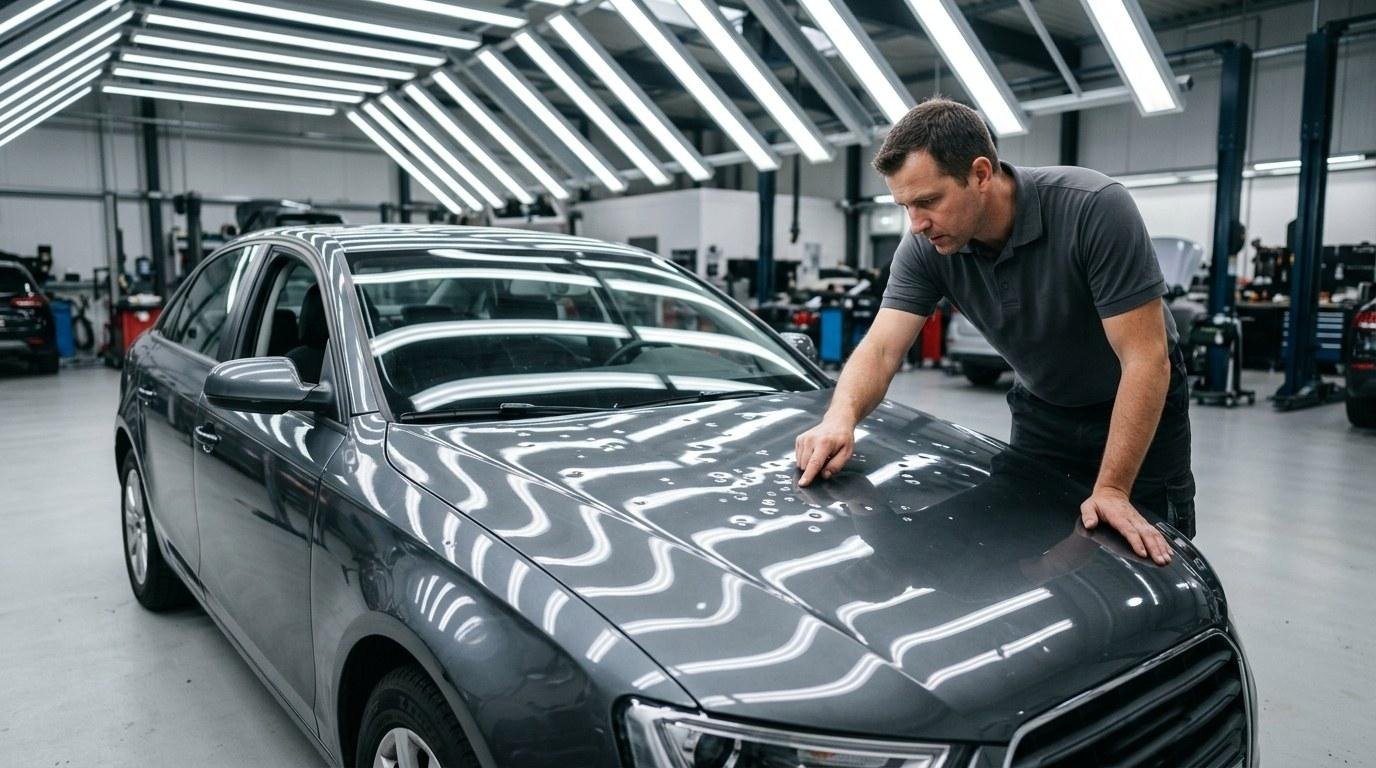
Specialized lighting reveals the full extent of hail damage before repairs begin.
By a vehicle repair industry contributor.
A hailstorm passes in minutes, but the choices you make in the next two days can affect your car’s value for years. The first thought for many people is to find the quickest, cheapest fix. This often leads to a repair that looks fine from a distance but hides problems that show up later, like during a trade-in or a lease return. A bad repair isn’t just about looks; it can mean repainting factory panels, which permanently lowers your car’s resale value.
What really matters is the repair method. Many shops use traditional bodywork, which means sanding, filling with putty, and repainting. A better way to fix most hail damage is Paintless Dent Repair (PDR). This is a method where technicians use special tools to gently push the metal back to its original shape from inside the panel. This saves the original factory paint. Knowing this difference is the first step when you look at a repair quote for hail damage repair denver co or anywhere else. The goal is to fix your car without creating new problems.
Quick answer: The biggest hail repair mistakes are choosing the wrong repair method, accepting an insurance company’s low first offer without a full shop inspection, and not getting a lifetime warranty on the work. These mistakes can lead to a lower vehicle value, future paint problems, and costs you have to pay yourself down the road.
What’s inside
- What’s Wrong With Cashing the Insurance Check Right Away?
- How Can You Tell if a Repair Shop Is a Real Expert?
- Why Does Hail Damage Affect More Than Just the Metal?
- Frequently Asked Questions About Hail Repair
What’s Wrong With Cashing the Insurance Check Right Away?
Cashing the first check from your insurance company can close your claim. This means you can’t get more money if a repair shop finds more hidden damage.
An adjuster’s first look at your car, often done in a parking lot or driveway, is just a quick first look. They are looking for damage they can see, sometimes in bad lighting. This first estimate is meant to be fast, not complete. It often misses small dents on side panels, damage to trim, or problems on tricky curved spots like roof rails. The check they write right there is based on this incomplete view.
Once a good shop gets your car inside, they check it much more carefully under special lights. They will almost always find more damage than the first adjuster did. The shop then files a “supplemental claim” with your insurance. This is a normal step where the shop shows the extra damage to the insurance company and asks for more money to fix it right. If you have already cashed the first check, you might have given up your chance to do this important step.
❝ A good rule is to never take the insurance company’s first offer as the final amount. Think of it as the start of a discussion. Your repair shop is the expert who will find and list all the work that needs to be done.
Instead of cashing the check, take the estimate to a trusted PDR specialist. Let them work directly with your insurance company. The shop will handle the request for more money for you, making sure every dent is paid for. This protects you from paying for missed dents and makes sure the repair is done right. You only approve the final payment when you’re happy with the work.
How Can You Tell if a Repair Shop Is a Real Expert?
You can tell a shop’s quality by seeing if they specialize in PDR, asking for proof of their technician’s experience, and making sure they use a careful process that saves your car’s paint.
Many general body shops list Paintless Dent Repair as a service, but it’s often a small part of their business. A true hail specialist focuses almost only on PDR. This matters because the tools, lighting, and the way they work are completely different from regular bodywork. A shop that handles hail damage every day will have a better system for everything, from the first look to handling insurance claims. They see more of this specific work, which makes them more experienced.
The skill of the person doing the work is the most important part of a PDR job. It is a craft that takes years of practice to master. You should feel comfortable asking questions about who will be doing the work.
❝ Ask the shop manager: “Who exactly will be working on my car, and how many years of experience doing only PDR do they have?” A fuzzy answer is a red flag. An experienced technician can fix larger, more difficult dents without hurting the paint, while a beginner may only be able to fix small, simple dings.
A professional PDR shop will want to bring your car inside for a careful estimate. They use special light boards or LED light tunnels that make every tiny dent or flaw on a panel easy to see. An estimate written in a sunny parking lot will almost always be incomplete. Also, ask how they get to the dents. Skilled technicians use openings that are already there or carefully remove interior panels. Drilling holes should only be a last resort. If they have to drill, the holes must be smoothed and sealed to prevent rust.
The table below shows the key differences between the two main repair methods.
| Feature | Paintless Dent Repair (PDR) | Traditional Body Repair |
| Method | Pushing metal from behind the panel. | Sanding, applying body filler, priming, and repainting. |
| Original Paint | Saved. No repainting is needed. | Removed. The panel is repainted. |
| Repair Time | Usually 1 to 3 days. | Often 1 to 2 weeks. |
| Vehicle Value | Keeps the factory finish, protecting resale value. | Can create a record on vehicle history reports, lowering value. |
| Best Use Case | Dents where the paint is not broken, common in hail damage. | Damage with cracked or chipped paint, deep creases, or torn metal. |
By focusing on these three areas (specialization, technician skill, and process), you do more than just shop for the best price. You are judging the quality of a result that should protect your car’s value over time.
Why Does Hail Damage Affect More Than Just the Metal?
Modern cars have complex electronics in the same panels that get hit by hail. Fixing the dents means these sensitive safety systems may need to be disconnected and reset.
A dent in a roof or side panel is no longer just a problem with how it looks. Many cars now have Advanced Driver-Assistance Systems (ADAS) with sensors and cameras built into the body. Features like lane-keep assist, blind-spot monitoring, and adaptive cruise control need sensors that are aimed perfectly. A hailstone can damage a sensor, but the repair process itself can also cause problems. For example, to fix dents on a roof, a technician often has to remove the fabric ceiling inside your car. This can bump the wires or mounts for cameras and sensors that are near the windshield and rearview mirror.
When these parts are disconnected or moved around, they must be recalibrated. Recalibration is an electronic process that resets the sensors to the car maker’s exact settings. If this step is skipped, your car’s safety systems may not work right. A camera that isn’t aimed correctly could fail to see lane markings, or a blind-spot sensor could give false warnings, creating a serious safety risk.
❝ Before agreeing to the repair, ask the shop: “Does my car have any ADAS features that will need to be recalibrated after the repair, and is that included in the estimate?” The answer should be clear and sure.
A good repair shop understands this. They will have the tools for PDR and also the special computer tools and training to do these electronic resets. The estimate should list this as a separate item. A shop that can’t explain how it handles ADAS is not ready to work on a modern car. The goal is to fix not just how your car looks, but also how it works and how safe it is.
Frequently Asked Questions About Hail Repair
What is the average cost to repair hail damage? There is no true “average” cost because the price depends on four things: the number of dents, their size, the panel material (aluminum is harder to work with than steel), and the work it takes to get to the back of the panels. Fixing a hood is simple, but fixing dents on a roof means removing and reinstalling the ceiling fabric, which takes a lot more time and is much harder. A good estimate will list the dent count and labor for each panel.
Is it worth it to fix hail damage on my car? For most cars, yes. Unrepaired hail damage can really lower your car’s trade-in or resale value. More importantly, if your car is damaged by hail again, your insurance company will subtract the cost of the existing, unfixed damage from the money they pay you for the new claim. This is a normal practice called “unrepaired prior damage,” which can leave you with a large bill you have to pay yourself for the second repair.
Will a hail damage claim raise my insurance premium? Typically, no. Hail damage is covered under the comprehensive part of your auto insurance, not collision. Comprehensive claims cover events you can’t control, like storms, falling objects, or theft. Insurance companies generally do not punish you or raise your rates for these types of claims like they would for an accident that was your fault.
Can you just “pop” hail dents out yourself? DIY methods using suction cups, dry ice, or heat guns are not a good idea and often cause more damage. These methods can easily crack the paint, turning a simple PDR job into a much more expensive traditional repair that needs body filler and repainting. Professional PDR technicians use special tools to carefully push the metal back to its original shape from behind, a process that saves your original paint.
What happens if the repair shop finds more damage than the insurance adjuster did? This is a very common and expected part of the process. The first insurance estimate is just a starting point. Once a professional shop brings your car into their shop and checks it under special lights, they will almost always find more dents. They will then record this extra damage and file a “supplemental claim” with your insurer to cover the cost of the full repair, managing the whole process for you.
See also: Beyond Spreadsheets: The Rise of Modern Financial Reconciliation Tech
The Bottom Line on a Proper Hail Repair
After a hailstorm, it’s natural to focus on the damage you can see. But the most expensive mistakes happen when you treat the repair as just a looks problem. The real job is handling the details of insurance claims, new car technology, and the special craft of Paintless Dent Repair. The first estimate from an adjuster is only a starting point. Making a final choice based on that first number, without an expert’s opinion, often leads to an incomplete repair and a permanent loss in your car’s value.
A successful repair depends on one thing: saving your vehicle’s factory finish. This needs a technician who can carefully fix each panel without using body filler and new paint. It also needs a shop that knows how to handle the sensitive electronic safety systems that are part of modern cars. A complete repair fixes not just the metal, but also includes the recalibration of any ADAS sensors moved during the process, making sure your car is as safe as it was before the storm.
In the end, your goal is to get the car back to its exact pre-storm condition. This protects its resale value and makes sure its safety features work right. Thinking about it this way changes your goal. You are not just looking for the fastest or cheapest way to remove dents. You are choosing a shop to correctly fix your valuable car.
About the author
Mile High Dents is a Denver-based automotive repair company specializing in Paintless Dent Repair (PDR). With a history dating back to the late 1980s, the company focuses almost only on hail damage, which makes up over 99% of its work. The team at Mile High Dents focuses on a process that saves a vehicle’s original factory paint while also handling the insurance claim process for car owners throughout the metro area. Their technicians bring decades of combined experience to the craft.