
By an industry contributor.
The biggest surprise in a home project often isn’t a design choice, but when you find out the hidden electrical work takes longer and costs more than you expected. Even a simple job like adding an EV charger or upgrading an old panel can run into delays from scheduling problems, waiting for materials, or required safety steps. This is why finding a reliable professional is crucial, and why many homeowners choose to hire a Table Mountain Electric electrician to handle the work properly.
The reason for this is simple: skilled electricians are in high demand. In fact, the U.S. Bureau of Labor Statistics expects the number of electrician jobs to grow 9% between 2025 and 2035. That’s much faster than the average for most jobs. This means that before you book an electrician, understanding what goes into a project will help you set a realistic budget and timeline. It’s the difference between a smooth project and a frustrating one.
Quick answer: The final cost of electrical work depends on more than just the electrician’s hourly rate. Three other main things affect the price: the changing cost of materials like copper wire, the details of getting a local permit, and the time needed for required safety inspections. Your timeline often depends more on when the inspector is free than when the electrician is.
What’s inside
- What Are the Primary Cost Drivers in an Electrical Project?
- What Questions Should I Ask to Avoid Surprises in a Quote?
- Why Does a Panel Upgrade Sometimes Involve the Utility Company?
- Frequently Asked Questions
What Are the Primary Cost Drivers in an Electrical Project?
The final price is a mix of three things: the cost of skilled labor, the changing price of materials like copper, and other costs like permits and inspections.
The biggest and most predictable part of your budget is usually labor. This isn’t just an hourly wage; it pays for years of training, certification, and insurance. The demand for qualified electricians is high and getting higher. According to the U.S. Bureau of Labor Statistics, the number of electrician jobs is expected to grow 9% between 2025 and 2035. This is much faster than the average for most jobs. This high demand affects how much labor costs. The same report notes the median pay for electricians was $63,190 per year in May 2025. This shows that you are paying for a skilled professional’s time and knowledge, not just for someone to do the work.
Next are material costs, which can change unexpectedly. The price of copper wire, which is essential for any electrical system, can change based on the worldwide market. A quote you get in February might need to be changed by April if copper prices go up. The same is true for other important parts like circuit breakers, electrical panels, and conduit. A good electrician will often list the exact parts in a quote to lock in a price, but big changes in the market can still affect the final cost.
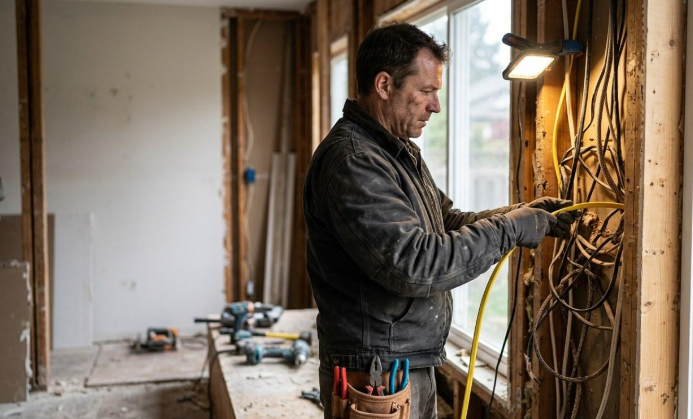
❝ A good rule of thumb for budgeting, especially in homes built before 1980, is to set aside an extra 10% to 15% for unexpected costs. You never really know what the wiring looks like behind a wall until you open it. It’s common to find old wiring or an overloaded panel, which means more work is needed that wasn’t in the original plan.
Finally, you have the “soft costs” of permits and inspections. These are not extra charges an electrician adds to make more money. They are legal requirements from your city or county to make sure the work is safe and meets the local code. The permit itself usually isn’t very expensive, but the process takes time. The project has to stop until an inspector from the city or county can visit. They will check the work and approve it before the walls can be closed up.
See Also: Why Is Check Fraud Soaring When Check Use Is Plummeting?
What Questions Should I Ask to Avoid Surprises in a Quote?
To avoid surprises, ask for a quote that breaks down the costs for labor, materials, permits, and inspections. Also, ask how they handle unexpected problems. A good quote is more than just a final price. It’s a plan that explains what is included and what is not. This helps prevent the project from getting bigger and more expensive than planned.
Start by checking the basics: licensing and insurance. An electrician should be able to give you a state or local license number right away. Also, ask for proof of general liability insurance, which covers damage to your property, and workers’ compensation, which covers their employees if they get hurt on your job. Not having either of these is a big red flag.
Next, look closely at the materials list. The quote should list the main parts, like the brand and size of a new electrical panel or the type of wiring that will be used. This stops a contractor from using cheaper materials to make more profit. It also gives you a way to understand any price changes. If the price of a specific Square D breaker panel goes up, you can see it’s a real market change, not just the electrician adding extra costs.
❝ Ask your potential electrician: “How do you handle unexpected problems, like finding ungrounded wiring or an overloaded circuit behind the drywall?” A professional will have a clear process. They will stop work, explain the problem, and give you a written estimate for the extra work before they continue. This protects both of you.
Finally, understand how the project involves the local government. The quote should clearly list the costs for getting the required permits. It should also explain the timeline for inspections. In many cases, work has to stop completely while waiting for a city inspector to arrive. This can add days to a project, and it’s not the electrician’s fault. Knowing this order of events upfront helps you have realistic expectations. According to the National Fire Protection Association, electrical problems are involved in tens of thousands of U.S. home fires every year. This shows why the code, permit, and inspection process is taken so seriously.
Why Does a Panel Upgrade Sometimes Involve the Utility Company?
A panel upgrade needs the utility company’s help when your home needs more power than your current electrical line can provide. This changes the job from a simple panel swap to a “service upgrade.” This is a bigger job that requires working with your power company to make sure everything is safe and works correctly.
Many homes, especially those built before the 1990s, have 60-amp or 100-amp electrical service. This was enough for the time, but today’s homes use much more power. Adding a Level 2 EV charger, an electric heat pump, a tankless water heater, or even a big kitchen remodel can easily use more power than the original system can handle. An electrician does a “load calculation” to figure out the total amount of power you might use. If it is more than your current service, an upgrade to 150 or 200 amps is needed.
This is not just about replacing the breaker box in your house. A service upgrade involves replacing the thick wires that run from the utility’s power line to your meter, as well as replacing the meter box itself. Because this work involves the main power line to your home, it cannot be done while the power is on. The electrician must schedule a “disconnect and reconnect” appointment with your local utility.
❝ The biggest scheduling challenge is getting the electrician, the utility company, and the city inspector to work together. The utility company won’t turn the power back on until they get approval from the city inspector. This is often a physical “green tag” that shows the new work meets all safety codes. A missed inspection could mean an extra day without power while you wait for all three people to be available again.
This process makes sure the entire system, from the street to your outlets, can safely handle more power. It’s an important step to prevent overloads, which are a main cause of electrical fires. National Fire Protection Association data consistently ranks electrical failures among the leading causes of home fires. Managing the details of a service upgrade is a key part of a professional electrician’s job, protecting both your home and your project’s timeline.
Frequently Asked Questions
How long does a typical electrical permit take to get approved? The time it takes to get a permit approved depends on how busy your local building department is. An electrician can often submit the application online in a day, but the review by the city or county can take a few business days for simple projects or several weeks for large ones. This is a delay caused by government paperwork, not by your electrician.
Is it cheaper to have electrical work done during a larger remodel? Yes, it is almost always cheaper. The main savings come from lower labor costs. When walls are already open for plumbing or framing, an electrician can run new wires and install boxes much faster than in a finished home, where they would have to cut and patch drywall.
What is the difference between a master electrician and a journeyman? A master electrician has the highest level of training. They need years of proven experience and must pass a difficult exam. They are legally allowed to design electrical systems, pull permits, and oversee other electricians. A journeyman is also a licensed, qualified professional but must work under the guidance of a master electrician and cannot pull permits on their own.
Can I buy my own light fixtures or EV charger for an electrician to install? You can, but you should talk to your electrician first. They can check that the product you picked will work with your system and meets local safety rules. Be aware that if you supply the part, the electrician’s warranty will likely only cover their labor, not a problem with the product itself.
Why can’t I get a firm price quote over the phone? A reliable quote is impossible without a site visit. An electrician needs to see the age and power level of your current panel, check the type of wiring you have, and figure out how easy it is to run new lines. A quote given without this information is just a guess and is likely to change a lot once the real work begins.