
By a surface preparation industry contributor.
That new industrial coating on your steel beams looks perfect. But six months later, it’s bubbling. That fresh paint on a historic brick building is already flaking away. These problems almost always happen for one simple reason: the surface wasn’t prepared the right way. You don’t just lose money on the wasted paint. You also have to pay for fixing the work, dealing with equipment that isn’t running, and project delays.
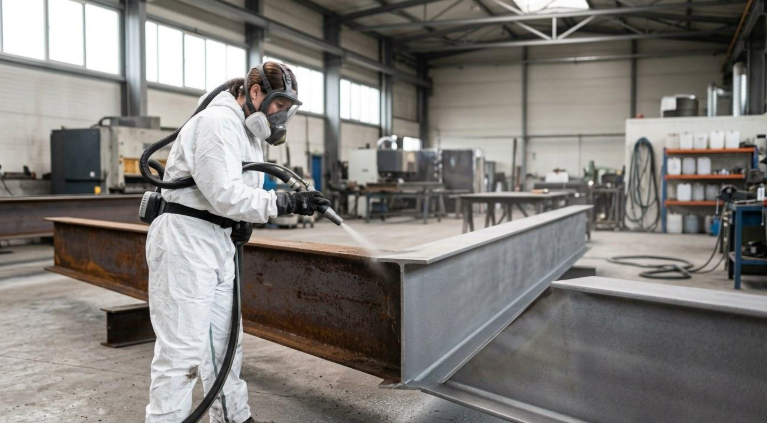
While many people still call this work “sandblasting,” the field has changed significantly. Today, the process is less about force and more about finding the precise method for the job. Choosing the right blasting material and equipment is key. The range of options available from a specialized team, including industrial power washing services, goes far beyond just sand. This detailed approach involves closely examining the surface, the old coating being removed, and the surrounding environment to prevent damage and ensure the new coating adheres properly.
This change is about more than just getting better results. Tougher rules for the environment and worker safety, especially about dust in the air, have made old methods outdated or impossible to use on many job sites. Property managers and contractors now need to understand these new methods.
Quick answer: Modern surface preparation is a careful process. It involves matching the right blasting material (like glass beads, walnut shells, or slag) and method (like dustless or soda blasting) to a specific surface. If you choose the wrong one, you can damage the surface, break safety rules, or cause the new coating to fail early.
What’s inside
- How do you evaluate a surface preparation plan?
- What happens when you choose the wrong abrasive media?
- Frequently asked questions
- The critical difference between a bid and a plan
How Do You Evaluate a Surface Preparation Plan?
A good plan looks at three things: the right surface texture, the choice of blasting material, and the plan for keeping the area clean. A detailed plan should have clear goals for the finished surface. It should also explain how the crew will protect the area around the worksite. This changes the talk from just price to how to get a result that lasts.
The most important thing that makes a coating stick is the surface profile, also known as an anchor pattern. This is a pattern of tiny peaks and valleys that the blasting material creates on the surface. This texture helps the new coating grip the surface. If the texture is too shallow, the coating won’t stick well. If it’s too deep, sharp points can poke through the coating and cause rust.
❝ Ask any potential contractor: “What surface texture, measured in mils, are you trying to create, and how will you check it?” They should give you a specific range, like 2 to 3 mils. They should also plan to check it with a special tool called a surface profile gauge. This question shows you who is a real pro.
Different coatings need different surface textures, and the standards for this are very clear. For example, preparing steel often follows rules from the Society for Protective Coatings (SSPC). These standards, like SP-10/NACE No. 2 for “Near-White Blast Cleaning,” give a clear goal for how clean the surface should be. Many project plans refer to these standards. Government and industrial projects use these standards to define how clean a surface needs to be.
Beyond the texture, the plan for containment and cleanup also shows if a contractor is professional and follows the rules. A good plan explains how they will control dust, used blasting material, and old paint. This is very important for safety and for following environmental rules.
Use this framework to assess any surface preparation proposal:
| Evaluation Area | Key Question to Ask | Why It Matters |
| Surface Profile | What is the target mil profile and how will it be measured? | Makes sure the new coating sticks right and lasts long. The wrong texture is a top reason coatings fail. |
| Media Selection | Why was this specific blasting material chosen for my surface? | The material must be hard enough to create the texture but not so strong that it damages the surface underneath. |
| Containment | What is your full plan for dust and debris containment? | Protects nearby property and keeps workers safe. It’s also often required by city and environmental rules. |
| Cleanup | How will used material and removed paint be collected and disposed of? | Getting rid of some materials the wrong way, like old lead paint, can lead to big fines and legal trouble. |
A well-defined plan that answers these points gives you a much better chance of a successful project than a simple, one-line quote. It shows that the work is being treated as the precise, technical step that it is.
What Happens When You Choose the Wrong Abrasive Media?
Choosing the wrong blasting material can permanently damage the surface. It can also create the wrong texture, which makes the new coating fail. It can even leave tiny bits of material behind that cause rust. Picking the right material isn’t about finding the “strongest” one. It’s about matching the material’s hardness, shape, and weight to the surface you are working on.
Abrasive blasting works by hitting the surface with tiny particles at high speed. Each particle hits the surface, chipping away old paint or rust and creating a new texture. The result depends on the type of material used. For example, a sharp material like crushed glass acts like a tiny chisel. It cuts into the surface to create a sharp texture that is great for thick coatings. On the other hand, a round material like a glass bead acts like a tiny hammer. It cleans the surface without removing much of the surface itself. That is why using a sharp material on soft aluminum could damage the metal. But using a round material on thick rust might not be strong enough to remove it.
❝ The biggest mistake is thinking that harder is always better. A material that is too hard for the surface won’t just clean it, it will break it. For softer things like certain metals or old brick, workers use a much softer material, like crushed walnut shells or even baking soda (soda blasting). These materials are strong enough to remove paint but gentle enough to leave the surface underneath unharmed.
Another key factor is how easily a material shatters when it hits the surface. A material like slag breaks apart on impact. This creates fresh sharp edges, but it also makes more dust and usually can’t be reused. A material that doesn’t break easily, like steel shot, can be reused. This makes it good for enclosed spaces like a blast cabinet, where it can be collected and used again.
See Also: Building a Business Website That Works for Saudi Arabia
In the end, the material you choose decides how the final surface will turn out. Using the wrong material is not a small mistake. It’s a major error that affects every other step of the job. A pro will always look at the surface and the goal first. Then, they will choose the right material to get the job done without causing other damage.
Frequently Asked Questions
Is dustless blasting completely dust-free? Not completely, but it cuts down on dust a lot. The method works by mixing water with the blasting material. The wet, heavy particles are less likely to float in the air. This can greatly reduce airborne dust. This makes it a great choice for cities or places with strict air quality rules.
How does weather affect the surface preparation process? Humidity is the biggest issue, especially for steel. When the air is very humid, a thin layer of rust called “flash rust” can form on a clean surface in just a few hours. To stop this, the new coating must be put on quickly, before rust ruins the new surface texture.
What is the difference between media blasting and high-pressure washing? Pressure washing uses high-powered water to clean off dirt, grime, and loose paint from a surface. Media blasting is stronger. It uses compressed air to shoot tiny solid particles at a surface. This strips off old coatings and rust and also creates a texture for the new coating to grip.
How long can a prepared surface wait before being coated? It depends on the surface and the weather, but you often don’t have much time. For steel, the new coating should usually be applied within hours, on the same day. Leaving a clean surface open overnight, especially when it’s humid, can lead to rust or dirt that will keep the new coating from sticking properly.
Are the abrasive materials themselves hazardous? Most modern blasting materials, like crushed glass or walnut shells, are safe and not toxic. The main danger usually comes from what you are removing, like lead paint. The rules for cleanup and disposal depend on the old paint, not just the blasting material.
The Critical Difference Between a Bid and a Plan
In the end, good surface preparation means treating the job like a technical project, not just a simple cleaning task. The price you pay upfront can be misleading. The real cost shows up later when a coating fails early because the surface wasn’t prepared right. Then you have to pay for a much more expensive do-over. It’s not just about price. It’s about paying for a good result versus taking a chance on a low bid.
The best way to avoid problems is to focus on the plan, not just the price. A detailed plan from a real pro will name the target surface texture, explain the choice of blasting material, and describe the plan for cleanup. These details aren’t just for show. They are key parts of a process that is meant to last.
As the person in charge, you don’t need to know every rule. You just need to ask the right questions to make sure your contractor does. A team that can clearly explain their methods gives you more confidence in their quality than any simple promise. The plan is what matters most. A good plan is the best sign of a successful project.